
‘Moderate Rebels’ enforcing law and order in liberated areas in Aleppo, Syria.
Source: Ammar Waqqaf
‘Moderate Rebels’ enforcing law and order in liberated areas in Aleppo, Syria.
Source: Ammar Waqqaf

Zionist leaders arrested in Operation Agatha, photographed in the Latrun detention camp. Left to right: David Remez, Moshe Sharett, Yitzhak Gruenbaum, Dov Yosef, Mr. Shenkarsky, David Hacohen, Mr. Halperin.
In World War II’s aftermath, MI5 turned to fight a new threat. It wasn’t the Soviets. It was bombers from Jerusalem.
The years after World War II were not kind to Britain’s intelligence services — especially MI5, its domestic counterintelligence and security agency. In the name of austerity, funding of the nation’s intelligence services was slashed, their emergency wartime powers removed, and their staff numbers drastically reduced. MI5’s ranks were reduced from 350 officers at its height in 1943, to just a hundred in 1946. Its administrative records reveal that it was forced to start buying cheaper ink and paper, and its officers were instructed to type reports on both sides of paper to save money. And there were some serious discussions within the government, as there had been after World War I, about shutting MI5 down altogether. Unfortunately for MI5, in the post-war years it faced the worst possible combination of circumstances: reduced resources, but increased responsibilities. After the war Britain had more territories under its control than at any point in its history, and MI5 was responsible for security intelligence in all British territories.
But MI5’s most urgent threat lay not in its diminished resources, nor from its new Soviet enemy. Recently declassified intelligence records reveal that at the end of the war the main priority for MI5 was the threat of terrorism emanating from the Middle East, specifically from the two main Zionist terrorist groups operating in the Mandate of Palestine, which had been placed under British control in 1921. They were called the Irgun Zevai Leumi (“National Military Organization,” or the Irgun for short) and the Lehi (an acronym in Hebrew for “Freedom Fighters of Israel”), which the British also termed the “Stern Gang,” after its founding leader, Avraham Stern. The Irgun and the Stern Gang believed that British policies in Palestine in the post-war years — blocking the creation of an independent Jewish state — legitimized the use of violence against British targets. MI5’s involvement with counterterrorism, which preoccupies it down to the present day, arose in the immediate post-war years when it dealt with the Irgun and Stern Gang.
MI5’s involvement in dealing with Zionist terrorism offers a striking new interpretation of the history of the early Cold War. For the entire duration of the Cold War, the overwhelming priority for the intelligence services of Britain and other Western powers would lie with counterespionage, but as we can now see, in the crucial transition period from World War to Cold War, MI5 was instead primarily concerned with counterterrorism.
As World War II came to a close, MI5 received a stream of intelligence reports warning that the Irgun and the Stern Gang were not just planning violence in the Mandate of Palestine, but were also plotting to launch attacks inside Britain. In April 1945 an urgent cable from MI5’s outfit in the Middle East, SIME, warned that Victory in Europe (VE-Day) would be a D-Day for Jewish terrorists in the Middle East. Then, in the spring and summer of 1946, coinciding with a sharp escalation of anti-British violence in Palestine, MI5 received apparently reliable reports from SIME that the Irgun and the Stern Gang were planning to send five terrorist “cells” to London, “to work on IRA lines.” To use their own words, the terrorists intended to “beat the dog in his own kennel.” The SIME reports were derived from the interrogation of captured Irgun and Stern Gang fighters, from local police agents in Palestine, and from liaisons with official Zionist political groups like the Jewish Agency. They stated that among the targets for assassination were Britain’s foreign secretary, Ernest Bevin, who was regarded as the main obstacle to the establishment of a Jewish state in the Middle East, and the prime minister himself. MI5’s new director-general, Sir Percy Sillitoe, was so alarmed that in August 1946 he personally briefed the prime minister on the situation, warning him that an assassination campaign in Britain had to be considered a real possibility, and that his own name was known to be on a Stern Gang hit list.
The Irgun and the Stern Gang’s wartime track record ensured that MI5 took these warnings seriously. In November 1944 the Stern Gang had assassinated the British minister for the Middle East, Lord Moyne, while he was returning to his rented villa after a luncheon engagement in Cairo. Moyne’s murder was followed by an escalation of violence in Palestine, with incidents against the British and Irgun and Stern Gang fighters being followed by bloody reprisals. In mid-June 1946, after the Irgun launched a wave of attacks, bombing five trains and 10 of the 11 bridges connecting Palestine to neighboring states, London’s restraint finally broke. British forces conducted mass arrests across Palestine (codenamed Operation Agatha), culminating on June 29 — a day known as “Black Sabbath” because it was a Saturday — with the detention of more than 2,700 Zionist leaders and minor officials, as well as officers of the official Jewish defense force (Haganah) and its crack commandos (Palmach). None of the important Irgun or Stern Gang leaders was caught in the dragnet, and its result was merely to goad them into even more violent counteractions. On July 22, the Irgun dealt a devastating blow, codenamed Operation Chick, to the heart of British rule in Palestine when it bombed the King David Hotel in Jerusalem, which housed the offices of British officialdom in the Mandate, as well as serving as the headquarters of the British Army in Palestine.
The bombing was planned by the leader of the Irgun, Menachem Begin, later to be the sixth prime minister of Israel and the joint winner of a Nobel Peace Prize. On the morning of July 22, six young Irgun members entered the hotel disguised as Arabs, carrying milk churns packed with 500 pounds of explosives. At 12:37 p.m. the bombs exploded, ripping the facade from the southwest corner of the building. This caused the collapse of several floors in the hotel, resulting in the deaths of 91 people. In terms of fatalities, the King David Hotel bombing was one of the worst terrorist atrocities inflicted on the British in the twentieth century. It was also a direct attack on British intelligence and counterterrorist efforts in Palestine: both MI5 and SIS — the Secret Intelligence Service, also known as MI6 — had stations in the hotel.
Read full article at Foreign Policy
Blackfish traces a 39-year history of killer whales in captivity leading up to the 2010 killing of SeaWorld trainer Dawn Brancheau by the 12,000-pound orca, Tilikum, a whale previously associated with the death of two other people. Blackfish chillingly shows that this incident of violence is hardly an isolated one, along the way exploring the extraordinary nature of orcas, thought to be one of the most intelligent species in the animal kingdom.
Watch the full documentary in HD at DiscloseTV: Part 1 and Part 2
Imagine our surprise when we noticed that one single Internet Protocol Address (IP Address) accounted for more than 54 percent of the votes, or about 180 of the total 328 votes. IP Addresses are typically unique Internet identifiers given to a computer or series of devices — say a multi-computer network in your office.
And who’s the owner of the domain name and company that address belong to? SeaWorld.com and SeaWorld Parks & Entertainment.
Source: ThinkProgress
Actors posing as workmen tell local businesses that the Israeli embassy is exercising its God-given right to take over their properties
In the sketch, two “workmen” in hardhats, claiming to be from the embassy and equipped with schematics and maps of the surrounding streets, begin informing shops and other businesses that the embassy is planning an extension to build a conservatory that will include the location of their properties.
Among the explanations they proffer are: “Before it was your land it was our land, so we are really going to take what was rightfully ours,” “It’s not like taking land is a big deal,” “We’ve been doing it for years,” and “This is our land that was given to us by the Almighty.”
One owner is told that the embassy doesn’t need planning permissions because it has a 2,000-year-old planning book. And when a store proprietor asks for a letter, she’s told: “We generally go with the bulldozers first and letters later.” Another is informed that the jars of olives in a deli display “are ours as well.”
One man, apparently amused by the claims made by the “workmen,” is told: “I’m finding that smile a bit anti-Semitic… so I think you should really wipe it off your face.”
Source: The Times of Israel

Boujemaa Razgui playng one of his handmade flutes.
Before you whine about an airline temporarily losing your luggage, think of poor Boujemaa Razgui. The flute virtuoso who performs regularly with The Boston Camerata lost 13 handmade flutes over the holidays when a US Customs official at New York’s JFK Airport mistook the instruments for pieces of bamboo and destroyed them.
Razgui, a Canadian citizen who lives some of the time in Brockton, had flown last week from Morocco to Boston, with stops in Madrid and New York. In New York, he says, an official opened his luggage and found the 13 flutelike instruments — 11 nays and two kawalas. Razgui says he had made all of the instruments using hard-to-find reeds. “They said this is an agriculture item,” said Razgui, who was not present when his bag was opened. “I fly with them in and out all the time and this is the first time there has been a problem. This is my life.”
When his baggage arrived in Boston, the instruments were gone. He was instead given a number to call. “They told me they were destroyed,” he says. “Nobody talked to me. They said I have to write a letter to the Department of Agriculture in Washington, D.C. This is horrible. I don’t know what to do. I’ve never written letters to people.” Our calls to US Customs and Border Protection were not returned Tuesday.
Razgui, who’s been performing with The Boston Camerata since 2002 and is scheduled to play with Camerata Mediterranea in February, says there are perhaps 15 people in the United States who play these sorts of instruments. “And now they’re gone,” he said. “I’m not sure what to do.”
Source: The Boston Globe
A YouTube video in which NSA boss Keith Alexander tries “to set the record straight” on the agency’s spying antics has nosedived. The half-hour interview triggered a wave of criticism from users, branding it the “most hated” video on YouTube in 2013.
In the wake of whistleblower Edward Snowden’s revelations on the massive espionage programs of the NSA, the spy agency has been hard pressed to defend its reputation. Since the security leaks emerged in May, the NSA has embarked on a campaign to clear its name. As part of the push, the US Defense Department published a video on YouTube in October seeking to justify the agency’s spy campaign.
However, the video had far from the desired effect and has been branded as one of the “most hated” videos of the year. Out of the 187,833 people who have viewed the video up until now 16,407 have hit the dislike button, compared to a mere 300 who “liked” the video.
Source: RT USA

Russia has strongly condemned as a “terrorist act” the fatal twin bombings outside the Iranian Embassy in the Lebanese capital Beirut. (Source: Press TV)
By Finian Cunningham
Saudi largesse is throwing money again – in a bid to cover up its bloodstained hands in violence hitting the Middle East and beyond.
The latest public relations gimmick is the “donation” of $3 billion to the Lebanese army made by Saudi King Abdullah at the weekend.
The Saudi cash – twice the national military budget of Lebanon – is being regaled in the Western media as a noble offer to secure Lebanon from recent terror attacks.
The announcement was made during a visit to Riyadh by French President Francois Hollande, who met the Saudi king and the latter’s Lebanese proxy, Saad Hariri.
The new Saudi military aid to Lebanon is tied to the condition that it must be spent on purchasing French weaponry.
Already, the outlines of a sleazy deal are emerging. The above political actors have done much to destabilize Lebanon with violence, which is now being blamed on the wrong people – Shia Hezbollah – thanks to the deft finger work of billionaire Paris-exile Hariri.
One of the main protagonists of terrorism – Saudi Arabia – now steps in with a military aid “gift” that will allow it to influence the Lebanese army to go after Saudi enemy Hezbollah.
Such an insidious interference by Saudi Arabia in the internal affairs of Lebanon can only but incite further sectarian tensions between Sunni and Shia in that country, which is still recovering from a 15-year civil war.
Source: Press TV
Lebanese troops opened fire on Syrian warplanes violating Lebanese airspace on Monday. According to Lebanon’s National News Agency, the incident occurred as the Syrians raided Khirbet Daoud, which lies between Homs and Damascus on the Lebanese side of the border.
The Lebanese response is thought to be the first of its kind in the Syrian war. Lebanon has previously avoided responding to Syrian attacks on rebel shelters in its territory so as not to be dragged into the bloody conflict.
The recent military action comes on the heels of an announcement that Saudi Arabia will contribute $3 billion to fund the Lebanese army. The announcement is being seen as part of the Gulf state’s rigorous efforts to counter Iranian influence in the region, as Riyadh pursues a more aggressive foreign policy following tensions with the US over how to handle the Syrian conflict.
Source: Israel National News
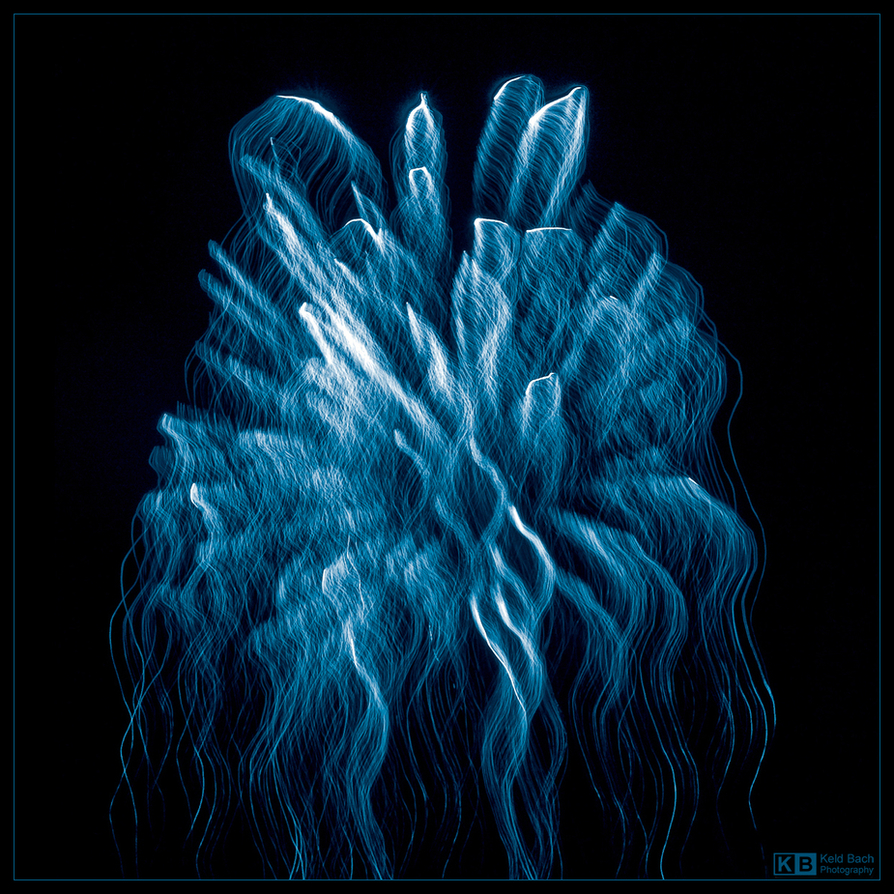
The Flying Jellyfish by Keld Bach (click image to enlarge)
Forgot to tighten the grip on my tripod when I tried to capture some of the fireworks last night. Anyway, I thought the result looked quite interestingly, like a flying Jellyfish or something. Hope you like it too, and wishing everyone a Happy New Year 🙂
A lecture by Dr. Chris Essex, Professor of Applied Mathematics at Univ. Western Ontario, and former director of its theoretical physics program. From “Doctors for Disaster Preparedness” 29th Annual Meeting, Albuquerque, NM, July 2011.
“In climate research and modeling, we should recognize that we are dealing with a coupled non-linear chaotic system, and therefore that long-term prediction of future climate states is not possible.”
Source: The Intergovernmental Panel on Climate Change (IPCC), Third Assessment Report (2001), Section 14.2.2.2, page 774. Read online version here.

Former Akademik Shokalskiy has been renamed in Al Gore’s honor. (Satirical image by: Ollie Cromwell)
It is summer in the southern hemisphere and yet there is still signifiicantly above normal amounts of sea ice present as the passengers and crew of one tour ship discovered. The icebreakers Xue Long and Aurora Australis, and a French research vessel Astrolabe have all given up reaching the Akademik Shokalskiy for rescue, and a helicopter evacuation is now being ordered. This episode has taken on a heightened comedic fiasco-like quality.
Now, with such a fantastic failure in full world view, questions are going to start being asked. For example, with advanced tools at their disposal, such as near real-time satellite imaging of Antarctic sea ice, GPS navigation, on-board Internet, radar, and satellite communications, one wonders how these folks managed to get themselves stuck at all. Was it simple incompetence of ignoring the signs and data at their disposal combined with “full steam ahead” fever? Even the captain of the Aurora Australis had the good sense to turn back knowing he’d reached the limits of the ship on his rescue attempt. Or, was it some sort of publicity stunt to draw attention? If it was the latter, it has backfired mightily.
More on this story at Watts Up With That?
See also: Warmists Stuck in a Sea of Denial
 Against the Grain