Omar Dahi tells Paul Jay that there is widespread belief among many Syrians that Geneva II is going to be a way to preserve the Syrian state and create a front for fighting al-Qaeda.
Syria: A Future as Foreign as Its Fighters?
With shifting alliances and infighting, we look at the difficulties the rebels face attempting to oust Bashar al-Assad. David Foster discusses with General Salim Idriss, the chief of staff of the rebel umbrella group, the Free Syrian Army.
John Clarke and Bryan Dawe with a lesson on how the financial system really works.
Bryan Dawe: Thanks for your time.
John Clarke: Very good to be with you Bryan, good evening.
Bryan Dawe: Now, you’re a market economist?
John Clarke: Yes, well, most economists are market economists Bryan, to a degree these days, yes.
Bryan Dawe: How do you think things are going at the moment?
John Clarke: There’s a great deal of international concern, we’re taking a towelling, but things will sort themselves out Bryan. This is what a market does.
Bryan Dawe: Well, can you explain how it works?
John Clarke: How the economy works?
Bryan Dawe: Well, yeah. What’s the problem at the moment, for instance?
John Clarke: Well, what we’ve got at the moment is an international credit crisis.
Bryan Dawe: Yes, how does that happen?
John Clarke: Well, I’m a bank Bryan, and I borrow money and lend it out. And I charge more to the people I’m lending it to than I pay the people from whom I borrowing?
Bryan Dawe: Well, who do you borrow money from?
John Clarke: Well, you know, from depositor’s Bryan. Have you got a dollar?
Bryan Dawe: Well, yeah, sure.
John Clarke: I borrow your dollar, and i give you, you know, there’s your bank balance.
Bryan Dawe: $1?
John Clarke: $1.
Bryan Dawe: Right, OK. And you pay interest to me on that?
John Clarke: I do, but I also charge you fees.
Bryan Dawe: Well, why do you charge me fees?
John Clarke: Well, because Bryan, I’m looking after your money. Your money is secure with me, I’m a bank. I mean, this is a very important amount of money; this is probably your nest egg, it’s safe with us.
Bryan Dawe: How much interest do you pay me?
John Clarke: Approximately the same as I’m charging you in fees.
Bryan Dawe: Oh, good deal for me.
John Clarke: Well, your money’s secure with us Bryan. And I then lend that money to businesses, and those businesses generate income. And this is how we build the economy.
Bryan Dawe: And they put the income into the bank?
John Clarke: They do, of course Bryan. That builds the savings pool, and we can invest more money.
Bryan Dawe: Well, who do you lend that to?
John Clarke: Well, to people who need credit Bryan. You see, money creates more money, so if we can create more money we’re broadening the economy, we’re expanding it all the time.
Bryan Dawe: But shouldn’t people just buy the things they can afford?
John Clarke: You don’t need to afford the things you’re buying Bryan; you need to afford the interest on the money you need to borrow in order to buy them.
Bryan Dawe: And you’re charging high rates for all this?
John Clarke: We do hop into them a bit on the credit rate Bryan; we stick the hydraulics under that because it’s a slightly higher risk strategy.
Bryan Dawe: Do people need to be buying these things they can’t afford?
John Clarke: Well, obviously they think so Bryan. I mean, these things are advertised to people as very necessary, very important, and deeply, deeply attractive.
Bryan Dawe: Well, who’s advertising things we people don’t need?
John Clarke: The companies we’re lending the money to.
Bryan Dawe: So OK, then you bought into the US sub-prime house market…
John Clarke: Well Bryan, so concerned are we to build a better Australia…
Bryan Dawe: You help build a worse America?
John Clarke: Yeah well, that was an accident Bryan. What we were doing was investing in the international investment market.
Bryan Dawe: That’s been a disaster.
John Clarke: Frankly, famously, it hasn’t been a huge success hitherto.
Bryan Dawe: Well so, what are you going to do?
John Clarke: Well, now you give me conclude $US 700 billion immediately.
Bryan Dawe: Why?
John Clarke: Well, because we need it Bryan. I mean the system needs money. Imagine the economy as a body, it needs blood pumping round it Bryan.
Bryan Dawe: But you haven’t got any?
John Clarke: We haven’t got any money, no.
Bryan Dawe: Well, why not?
John Clarke: Well, we lost ours; I’ve just been explaining that.
Bryan Dawe: Well, you’re not having mine.
John Clarke: Mum, Bryan won’t let me play with his stuff.
Artist’s impression shows the surroundings of the supermassive black hole at the heart of the active galaxy NGC 3783 in the southern constellation of Centaurus (The Centaur) (AFP Photo)
Scientists have found the “clearest evidence yet” that the universe we inhabit is a giant hologram, paving the way towards reconciling one of physics’ most pressing issues: the relationship between Einstein’s theory of relativity and quantum physics.
In other words, we could be living inside a giant 3D projection of what is actually a two-dimensional space, similar to an IMAX movie theater screen or a painting. Or one could simply imagine the experience of looking at a three-dimensional object from various angles and seeing it change shape according to the point of observation.
The new experimental simulations proposed by Japanese scientist, Yoshifumi Hyakutake, and his team at the Ibaraki University of Japan tackle the varying energies of black holes discovered in parallel universes. But it also goes a long way towards marrying Einstein’s theory of general relativity and the theory of quantum mechanics as the two main theories describing our universe.
The findings were published in the journal, Nature, on December 10.
The UN has named 2014 as the ‘Year of Solidarity with the Palestinian People.’ The resolution was adopted by the majority of member-states with 110 voting in favor, 7 opposed and 54 abstaining.
The year-long observance will entail organizing special events in cooperation with “governments, relevant organizations of the United Nations system, intergovernmental organizations and civil society.”
Palestinians have made significant strides towards self-determination recently. In November of last year the UN General Assembly granted the Palestinians observer status at the international organization, thus implicitly recognizing a Palestinian state. The Palestinian bid has been upheld with 138 votes in favor, 9 against and 41 abstentions.
The new status could give the Palestinians more weight in peace talks with Israel and gives them a greater chance of joining UN agencies and the International Criminal Court (ICC). Joining the ICC would also grant the Palestinian delegation a greater legal basis for pursuing possible war-crimes prosecutions against the Israeli military.
Map courtesy of Occupied Palestine (click image to enlarge)
The Israeli regime is carrying out large-scale Nazi-style ethnic cleansing in the occupied West Bank by destroying the Palestinian properties, an analyst tells Press TV.
“In my opinion, this type of large-scale ethnic cleansing is nothing more than what I would call…Israeli style and I think that in its inhumanity and in its callous displacement of indigenous population, I would call it Nazi-like in its extreme disregard for human life for the rule of law,” Bruce Katz said on Friday.
He said the Zionist regime is pushing ahead with its “brazen continuation of ethnic cleansing which has really gone on since 1948.”
On Wednesday, the United Nations denounced Israel for demolition of Palestinian homes and displacement of their residents in the West Bank.
It’s probably not the kind of recognition he wanted to receive, but President Barack Obama has been awarded PolitiFact’s “Lie of the Year” for 2013.
The infamous prize, handed out annually by the fact-checking website PolitiFact, was given to Obama because of his statements claiming that Americans would be able to keep their health insurance under the Affordable Care Act if they liked their plan.
Obama’s explanation didn’t pass muster, however, especially since he’d been captured on video promising that health care plans would stay in place at least two dozen times. Facing public backlash, Obama apologized and unveiled a one-year plan to allow insurers keep selling existing plans that are about to be cancelled.
Edward Snowden, seen during a video interview with The Guardian. (Glenn Greenwald/Laura Poitras /EPA/LANDOV)
Edward Snowden, who has become the public face of an international debate over surveillance, tops the list of Foreign Policy‘s Global Thinkers for 2013. The former National Security Agency contractor who disclosed the inner workings of the U.S. intelligence operations has been living in Russia since June and is currently wanted by U.S. law enforcement authorities and faces charges in federal court. In lieu of attending a reception in Washington on Wednesday for this year’s Global Thinkers, Snowden sent the following statement:
It’s an honor to address you tonight. I apologize for being unable to attend in person, but I’ve been having a bit of passport trouble. Glenn Greenwald and Laura Poitras also regrettably could not accept their invitations. As it turns out, revealing matters of “legitimate concern” nowadays puts you on the list for more than “Global Thinker” awards.
2013 has been an important year for civil society. As we look back on the events of the past year and their implications for the state of surveillance within the United States and around the world, I suspect we will remember this year less for the changes in policies that are sure to come, than for changing our minds. In a single year, people from Indonesia to Indianapolis have come to realize that dragnet surveillance is not a mark of progress, but a problem to be solved.
We’ve learned that we’ve allowed technological capabilities to dictate policies and practices, rather than ensuring that our laws and values guide our technological capabilities. And take notice: this awareness, and these sentiments, are held most strongly among the young–those with lifetimes of votes ahead of them.
Even those who may not be persuaded that our surveillance technologies have dangerously outpaced democratic controls should agree that in democracies, surveillance of the public must be debated by the public. No official may decide the limit of our rights in secret.
Today we stand at the crossroads of policy, where parliaments and presidents on every continent are grappling with how to bring meaningful oversight to the darkest corners of our national security bureaucracies. The stakes are high. James Madison warned that our freedoms are most likely to be abridged by gradual and silent encroachments by those in power. I bet my life on the idea that together, in the light of day, we can find a better balance.
I’m grateful to Foreign Policy Magazine and the many others helping to expose those encroachments and to end that silence.
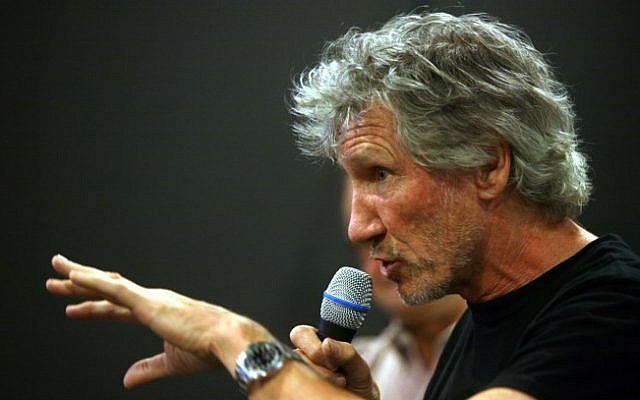
Having previously defended Roger Waters from accusations of anti-Semitism, the Anti-Defamation League (ADL) on Thursday reluctantly acknowledged that “anti-Semitic conspiracy theories” have “seeped into the totality” of the former Pink Floyd frontman’s views.
The ADL was responding to comments Waters made in an interview Saturday with Counterpunch magazine comparing Israeli treatment of the Palestinians to Nazi Germany.
“Judging by his remarks, Roger Waters has absorbed classic anti-Semitic conspiracy theories, and these have now seeped into the totality of his views,” Abraham H. Foxman, National Director of the ADL), told The Times of Israel. “His comments about Jews and Israel have gotten progressively worse over time. It started with anti-Israel invective, and has now morphed into conspiratorial anti-Semitism.”
Added Foxman: “How sad that a creative genius could become so perverted by his own narrow-minded bigotry.”
Uruguay has become the first country in the world to legalize both the sale and production of marijuana. President Jose Mujica has championed the measure as a way of combatting the illegal drug industry that has decimated parts of Uruguay.
The country’s parliament passed the bill by a vote of 16 to 13 on Tuesday evening. Senator Alberto Couriel, a member of the ruling Broad Front left-wing coalition, called the passing of the bill “a historic day” for Uruguay.
Under the new legislation, the price of marijuana will be set at one dollar per gram, aiming to undercut the current price of $1.40 on the illegal market. The sale and production of the drug will be regulated by a specially-set-up government body which will administer a database of adult citizens registered to consume marijuana.
“This is an attempt to bring an end to the illegal drugs trade by identifying the market and bringing it into the light of day,” said President Mujica in a statement. Mujica added that the law does not promote the consumption of the drug; it merely identifies the consumer so that authorities may “intervene if [the consumer] overdoes it.”
Before the new legislation was passed, the consumption of marijuana in Uruguay was not penalized, but the sale and production of the drug was considered a criminal offense.
A number of conditions will govern the sale and production of the drug. Registered Uruguayans over the age of 18 will have the right to buy up to 40 grams of marijuana from pharmacies every month and cultivate a maximum of six plants on their property. The legislation will also allow for the creation of so-called cannabis clubs, composed of up to 45 members who will be able to grow a maximum of 100 plants.
Uruguay’s National Drug Board estimates that there are around 120,000 marijuana users in Uruguay from a population of 3.3 million. Consumer groups estimate a higher figure, putting the number of users at around 200,000.