“We Had the Bible, and They Had the Land”

How the West plundered Africa under the guise of Christ. History shows what was behind European humanitarian missions in Africa.

For decades, humanitarian aid has been the epicenter of Western engagement with the African continent. Africa has been largely depicted as a continent lacking essential needs, from food and medicine to governance and human rights. While this act is largely encapsulated in the ideals of cooperation and generosity, history offers a reminder that beneath some of them lie hidden dark secrets that perpetuate a sense of dependency and efforts that hinder Africa’s progress.

Historically, deceptive benevolence disguised as humanitarianism dates back to the colonial era, particularly in the Democratic Republic of the Congo. After the discovery of vast natural resources by the 19th-century explorer and journalist Henry Morton Stanley, Belgium’s notorious King Leopold II contacted him and convened the Brussels Geographical Conference in 1876.

The conference was promoted as a humanitarian mission to ‘civilize’ the region, end the Arab slave trade, sponsor Stanley’s expeditions, and open the Congo to global commerce – which in practice meant trade in looted goods by colonial invaders. In 1877, King Leopold II called for the establishment of the International African Association (IAA), ostensibly a humanitarian organization governed by a board of explorers and geographers.

[…]

To advance their imperial ambitions, colonial governments poured money into sectors that could most effectively indoctrinate local populations – often at the urging of missionaries themselves. The British colonial administration, in particular, provided grants to institutions such as Fourah Bay College, which later became affiliated with the University of Durham in Britain and served as a training center for missionary clergy, colonial administrators, and clerks.

In Ghana and Nigeria, the passage of the 1882 Education Ordinance Act formalized colonial support for missionary education through curriculum development, teaching materials, and the promotion of the English language. This curriculum glorified the British Empire and its literature while portraying Africa as a primitive, barbarous continent “without history.”

As King Leopold II wrote to the missionaries in 1883:

“Your action will be directed essentially to the younger ones, for they won’t revolt when the recommendation of the priest is contradictory to their parent’s teachings. The children have to learn to obey what the missionary recommends, who is the father of their soul. You must singularly insist on their total submission and obedience.”

When Africans resisted such indoctrination, missionaries often turned to military force through the backing of colonial governments. This was the case with the German-Swiss Basel Mission’s activities in the Ashanti region of the Gold Coast, now Ghana. The missionaries lobbied the British House of Commons and provided intelligence on the organization of the local population, paving the way for the colonial military subjugation of the Asante people and their rulers.

The conflict stemmed from the Asante’s deep commitment to their traditional religion, cultural practices, and military strength – all of which stood in the way of the missionaries’ deceptive ‘benevolence’. Many African chiefs shared the Asante’s fate. In Botswana, for example, the missionaries campaigned for the removal of Sekgoma Letsholathebe (1835–1870), who was subsequently detained for five years under the authority of the British colonial high commissioner.

What was called a ‘civilizing mission’ ultimately revealed itself as an enduring project of imperial domination. As South African theologian Desmond Tutu once put it:

“When the missionaries came to Africa, they had the Bible, and we had the land. They said, ‘Let us pray.’ We closed our eyes. When we opened, we had the Bible, and they had the land.”

Read the full story at: RT International

Header image from the article, resized and slightly enhanced by me.
Posted in Imperialism & Colonialism, International Politics, Religion & Philosophy | Tagged , | Leave a comment

Israel’s Digital Iron Dome

“Israel’s” Digital Iron Dome campaign uses coordinated messaging and algorithmic tools to suppress pro-Palestine voices online, raising concerns over propaganda and digital censorship.

“Israel” has long invested in shaping its image online, but its latest initiative, the Digital Iron Dome, represents a new level of sophistication in information warfare. Marketed as a “civilian defense initiative,” the platform (lp.digitalirondome.com) invites users worldwide to join a “digital army” tasked with countering what it describes as “disinformation” and “defending Israel online.”

A closer look, however, reveals a different reality. The initiative functions less as a neutral fact-checking tool and more as a coordinated influence operation. Users are encouraged to register and access pre-scripted posts, hashtags, and visual content optimized for viral sharing across X, Instagram, and TikTok. By centralizing narrative control in this way, the platform effectively outsources public diplomacy to civilians while framing entity-aligned messaging as grassroots activism.

The platform’s design mirrors modern marketing technology, with embedded tracking scripts and analytics monitoring engagement in real time. The Digital Iron Dome turns seemingly spontaneous online support into a highly engineered content amplification system aimed at shaping global perceptions of the Israeli genocide in Gaza and countering criticism through algorithmic dominance.

Full story at Al Mayadeen.

Original image via Al Mayadeen, cropped and slightly modified by me.

Posted in Imperialism & Colonialism, International Politics, Internet & IT, Media & Journalism, War & Terror | Tagged , , , | Leave a comment

Israel’s Hilltop Youth: Thou Shalt Not Kill


Residing on outposts often neighbouring areas populated heavily by Palestinians (not to be confused with Israeli settlements) the Hilltop Youth are known for their extreme religious nationalism. Mostly made up of young people between the ages of 16 and 25, the group are followers of Kahanism; an ideology based on the teachings of the late Rabbi Meir Kahane.

Meir Ettinger, Kahane’s grandson, was one of several settlers charged for the Duma murders, also known as “Price Tag” killings, alongside 21-year-old Amiram Ben-Uliel and an unnamed minor. They were all released after serving minimal prison time.

The label “Price Tag” was born from actions taken by the group to claim a “price” for any actions taken against them or their hilltop settlements by Palestinians.

I’m teaching Ahmed that you don’t have to seek vengeance. That you do not have to kill. Your vengeance must be your success.

Hussein Hassan Dawabshe , Ahmed Dawabshe’s grandfather

“This is how the concept of ‘Price Tag’ was created. It’s because the government did not take revenge against our enemies,” says Kahanist and settler, Moriya Goldberg.

“The people who burned the house in Duma wouldn’t have done it if the state treated Arabs as enemies,” says Goldberg’s sister, Rut.

Although relatively small, with only several hundred members, the Hilltop Youth are known for having incited violent acts of hatred against Palestinians and Palestinian homes, mosques and churches.

They are also known for having a difficult relationship with left-wing Israelis, the Israeli army and even with Shin Bet, Israel’s internal security service.

Posted in Culture & Society, Imperialism & Colonialism, Religion & Philosophy, Videos & Documentaries | Tagged , , , | Leave a comment

Afghanistan: The Price of Peace


The United States’ Afghan war – more than two decades of conflict, trillions of dollars spent, tens of thousands of civilian and military lives lost and the Taliban ultimately reclaiming power. What was this US intervention all about, was it worth it and could it ever realistically succeed?

This documentary investigates how, despite spending more than $2.3 trillion and two decades in Afghanistan from 2001 to 2021, the US failed to achieve its objectives of building a stable Afghan state and military capable of resisting the Taliban. We hear from Taliban officials, American military personnel, Afghan civilians, key political figures and experts, with different perspectives on the war goals, strategies and ultimate failure.

The film, Afghanistan: The Price of Peace, examines the human toll of the occupation, cultural and political missteps and the enduring challenges facing Afghanistan after the return of the Taliban. It also reflects on the broader themes of imperialism, nation-building and the enduring struggle for sovereignty.

Posted in Imperialism & Colonialism, International Politics, Videos & Documentaries, War & Terror | Tagged , , | Leave a comment

The Continued Humiliation of European Poodles

To agree to a peace deal with Russia, Ukraine wants security guarantees so that it can deter any future attacks by the Kremlin forces. That means, Zelensky says, a strong Ukrainian army that is provided with weapons and training by Western partners.

Ukraine will promise to buy $100bn of American weapons financed by Europe in a bid to obtain US guarantees for its security after a peace settlement with Russia. But…

“The plan is for the US to sell weapons to the Europeans, who will then provide them to Kiev. However, the US doesn’t have the weapons to sell, the Europeans don’t have the money to buy, and Kiev doesn’t have the soldiers to use them. Other than that it’s a foolproof plan.”

Source: Moon of Alabama.

Posted in International Politics, War & Terror | Tagged , , , , | Leave a comment

The EU Can’t Make Peace – Only Enemies

Europe is leaving the world stage in disgrace

The most dangerous thing about Western Europe today is not just its decline, but its refusal to recognize it. The half-continent continues to posture, continues to lecture, and continues to imagine itself as a pillar of global order. But it has lost the internal resources that once sustained that illusion. What remains is a hollow echo of power, wrapped in a language of values that even those same Western Europeans no longer seem to believe.

The region’s failure is most visible in its inability to make peace. Time and again, it chooses confrontation – with Russia, with China, with reality itself. Devoid of meaningful autonomy, it now functions as a permanent appendage of the US. It is no longer an actor on the world stage, but a supporting cast member, often unwelcome and increasingly irrelevant.

Western Europe’s descent has been rapid. Just 10 or 15 years ago, it projected global importance and confidence. Today, the cracks are impossible to ignore. The reasons are many: Elite degradation, political inertia, a population gripped by apathy. But above all, it is the bloc’s unrelenting selfishness – its refusal to give, only to demand – that lies at the heart of this collapse.

Nowhere was this clearer than in last week’s failed EU-China summit. Eurocrats went to Beijing with nothing to offer, only with a desire to extract. China, which has no historical affection for Western Europe, responded accordingly. There was simply nothing to discuss.

And then, as if to underscore its strategic drift, the bloc offered a humiliating concession to the US. Faced with the threat of new tariffs, Brussels agreed to purchase American energy and weapons in vast quantities. So much for ‘strategic autonomy’.

These are not signs of a serious power. These are the actions of a civilization on the back foot, stumbling blindly into dependence. Anyone still speaking of a sovereign EU industrial or defense policy is either a fantasist or a liar.

Full article at: RT International.

Related: Germany and rest of EU transforming into a Fourth Reich – Lavrov

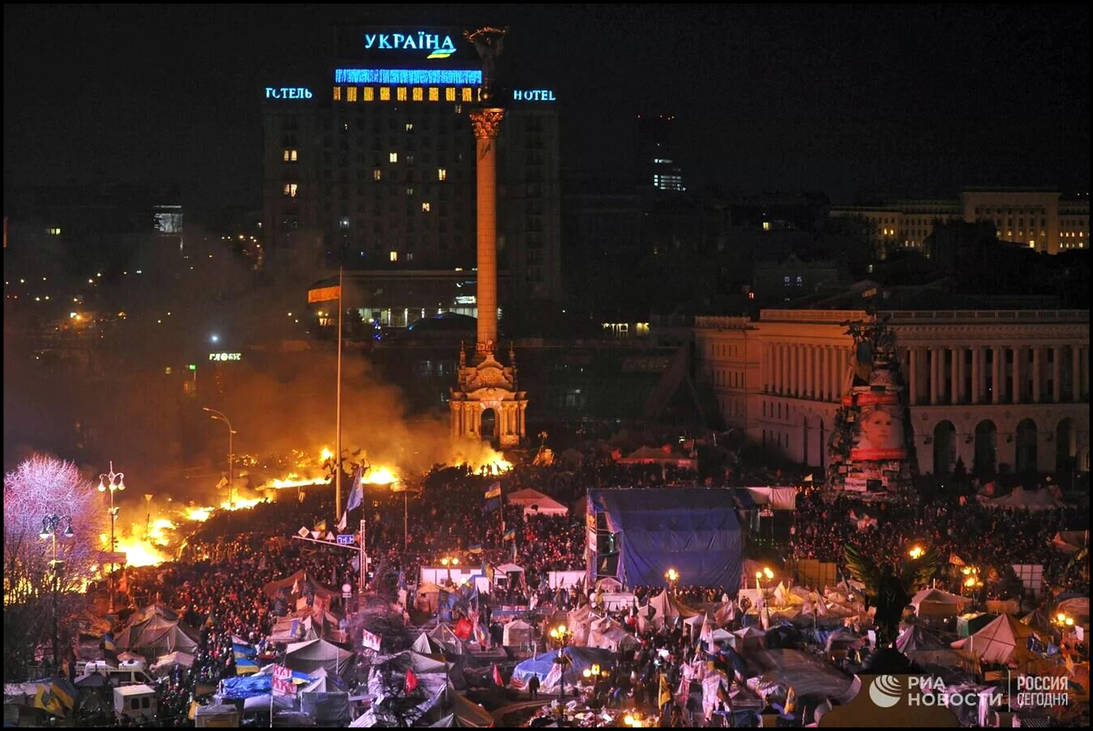
Header image is courtesy of Euromaidan Press, cropped and slightly enhanced by me.

Posted in International Politics | Leave a comment

The Biggest Trade Deal Ever Made

The United States and the European Union have agreed on a new trade deal, which envisages, among other things, a zero tariff on US imports to the European markets and a 15% baseline tariff on all EU goods coming to the US, including cars, US President Donald Trump said on Sunday.

“I just want to congratulate you. I think it is great that we made a deal today instead of playing games and maybe not making a deal at all … I think it is the biggest deal ever made,” Trump said at a meeting with European Commission President Ursula von der Leyen in Scotland.

Under the new deal, the EU agrees to purchase $750 billion worth of energy from the United States and “a vast amount” of military equipment, Trump said. The EU will invest an additional $600 billion in the US economy and open up the countries’ markets to trade with the US at zero tariffs.

Source: Sputnik International.

Original photo via Ritzau Scanpix, cropped and slightly enhanced by me.
Posted in Culture & Society, Finance & Economy | Tagged , , , | Leave a comment

The Pawn, the Jester, the Puppet

Related articles:
The Zelensky Myth
Bloody Jester: Volodymyr Zelensky’s Rise to Power
Ukraine’s Former PM Reveals How Zelensky Transformed From Stage Actor to American Puppet

Background images via Wallpaper Flare and Adobe Stock, modified by me.

Posted in War & Terror | Tagged , , , , , | Leave a comment

How Vikings Became Brutal Norman Kings


They were the Northmen who changed history. Starting as heathen Viking warriors who plundered and settled in Northern France and forged the new Duchy of Normandy, becoming the most ferocious conquerors that medieval Europe had ever seen, and giving England its most famous date: 1066.

In this two part series, Dr Eleanor Janega sets off across Normandy to discover who this band of rugged warriors, settlers and rulers were.

Posted in Culture & Society, Imperialism & Colonialism, Videos & Documentaries | Tagged , | Leave a comment

Trump Envoy: Ukraine Could be Divided Like Postwar Berlin

General Keith Kellogg suggests UK and France could lead western zone of control in interview with The Times

President Trump’s envoy to Ukraine has said the country could be partitioned “almost like Berlin after World War Two” as part of a peace deal.

General Keith Kellogg, a leading figure in US efforts to end the three-year war, suggested that British and French troops could adopt zones of control in the west of the country as part of a “reassurance force”, with Russia’s army in the occupied east. Between them would be Ukrainian forces and a demilitarised zone.

Kellogg, 80, said the Anglo-French-led force west of the Dnipro river, which bisects Ukraine from north to south and runs through Kyiv, would “not be provocative at all” to Moscow. He said Ukraine was a big enough country to accommodate several armies seeking to enforce a ceasefire.

“You could almost make it look like what happened with Berlin after World War Two, when you had a Russian zone, a French zone, and a British zone, a US zone,” he said.

Source: The Times.

Posted in Imperialism & Colonialism, War & Terror | Tagged , , , , , | Leave a comment