

The US is building a resource-driven world order based on energy dominance, territorial leverage, and Europe’s strategic weakness
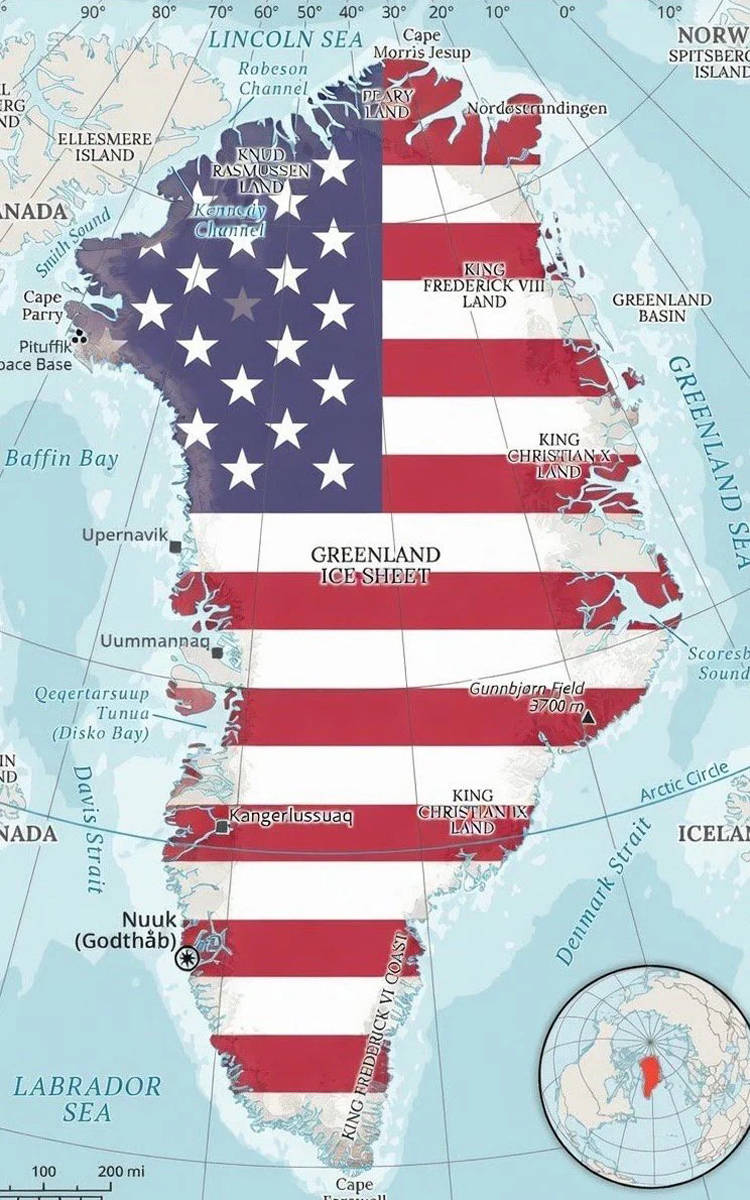
When US President Donald Trump returned to the topic of acquiring Greenland – one that seemed largely forgotten just a month ago – the idea wasn’t considered mere ‘theatrics’, particularly in Europe. And it’s not just about the ‘Maduro effect’. Beneath Trump’s provocative statements, a clear geopolitical strategy is emerging, one that can be termed ‘new globalism’. This approach is far more economically grounded than the concept of globalization, even US-centric globalization.
Trump’s ‘new globalism’ consists of three logically interconnected components:
-
Reinterpreting the Monroe Doctrine (One may wonder if Trump considers the Philippines part of this ‘Greater America’ as well…)
Transforming the US into an energy superpower that monopolizes the rules of the game in the hydrocarbon market, particularly in regional trade
Enhancing America’s status as an Arctic superpower – a position that the US currently holds only nominally
Trump’s actions are quite logical: dismantling Nicolas Maduro’s regime is crucial for turning Latin America’s resources into a source of short-term economic stability for the US. This is Trump’s ‘entrance ticket’ into the world of ‘new globalism’. America cannot become an energy superpower unless it has control over Venezuela’s (and eventually Brazil’s and Iran’s) oil resources and eliminates ‘shadow fleets’ as soon as possible. Similarly, achieving full legal control over Greenland is essential for establishing the US as an Arctic power. Otherwise, it would be difficult for the US to maintain competitiveness as an energy superpower after 2030.
Full story at: RT International. Header image is courtesy of Mental Floss, cropped and slightly enhanced by me. See also:
 Against the Grain